On Our Radar
The real obstacle to growth isn’t your competition — it’s internal misalignment.
The world is moving faster than ever. Consumer expectations are shifting overnight. Tech is rewriting the rules. Geopolitical and economic shakeups are making the future harder to predict. And while we say something like this each year (and mean it every time), the reality is that the pace of change has reached a tempo we’ve never seen before.
In environments like this, it’s easy to get distracted. To chase headlines. To stretch in a dozen directions at once. Throw in short-term pressure to perform, and misalignment becomes the norm — not the exception. The tell-tale signs? Teams that are divided, misguided, and headed in different (or worse, opposing) directions – making long-term growth strategies impossible to execute.
Yet meanwhile, top-performing businesses see uncertainty and quickly turn it into opportunity. Their secret? Something we at Jackman call True Alignment — the art of orchestrating vision, strategy, and execution to all work in harmony.
Think Fast
True Alignment means everyone moving toward a singular, bold vision with interconnected strategies and seamless execution.
Leaders can’t manage every move directly. But they can equip decision-makers with clear direction, frameworks, and guardrails to uphold the beliefs of and vision for the business. When you do that, better decisions happen faster, and teams resolve challenges quicker. Most importantly, you build momentum — fueling every part of the organization to move forward, together, fast.
True Alignment goes well beyond agreement in a boardroom.
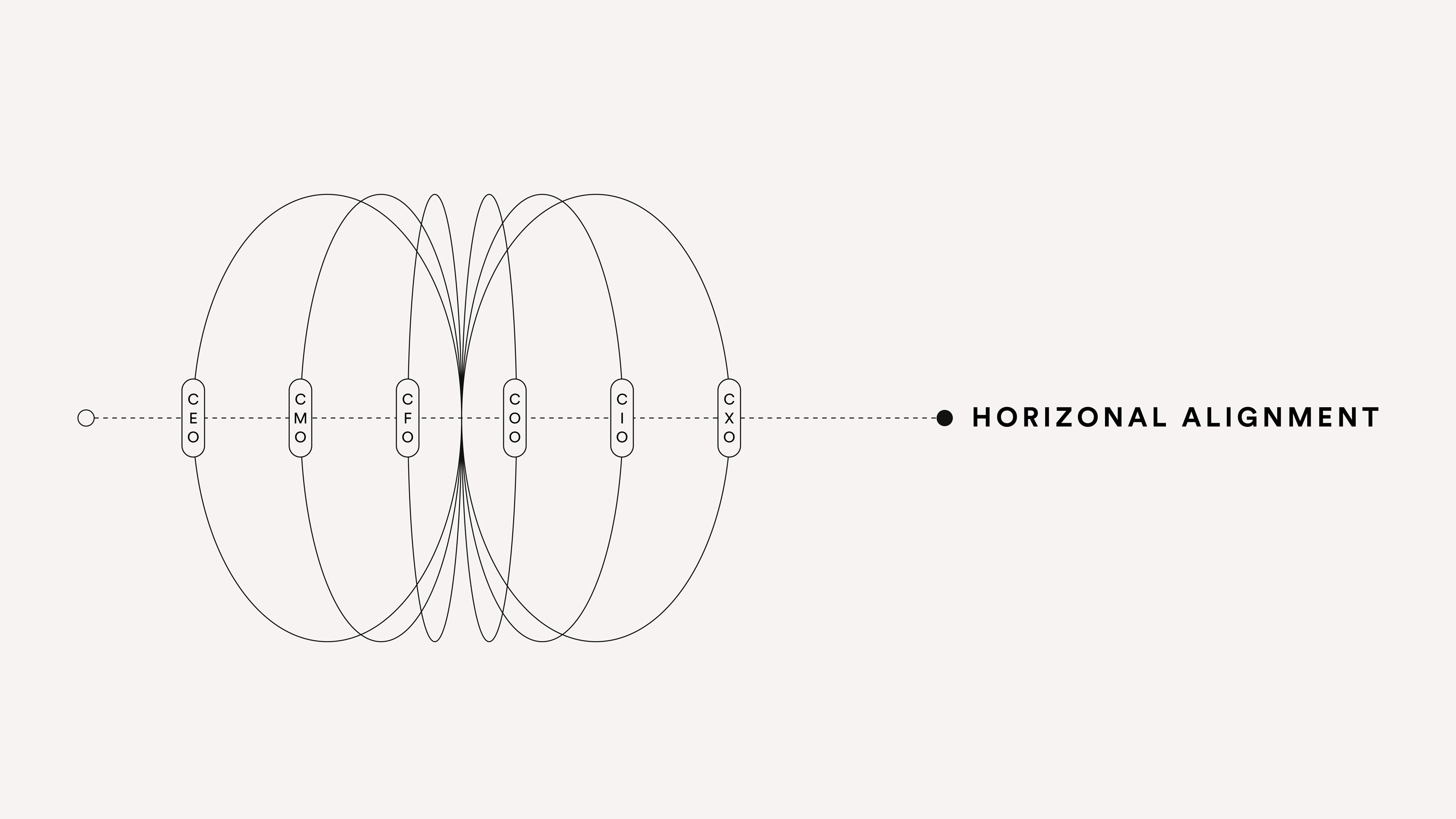
When many people think of alignment, they picture a group of executives sitting around a boardroom table nodding in agreement. And make no mistake, True Alignment often starts with — and absolutely requires — executive alignment and agreement amongst leaders. At Jackman, we call this top-of-house calibration Horizontal Alignment.
But strategy isn’t just a tool for the top: It’s a multiplying force that must be embedded in how teams operate, how decisions are made, and how value is created for customers. That means translating executive vision into strategy, and strategy into tangible action across the entire business — a process we call Vertical Alignment.
True Alignment requires both Horizontal and Vertical Alignment. And it’s not easy to achieve. That’s why internal misalignment is a common organizational ailment that often goes unaddressed. But having helped 100+ clients over the past 17 years transform and reposition their businesses for growth, we’ve seen that True Alignment is achievable for those bold enough to buck the status quo. And although every business is unique, the same tools can be used to help any team reach True Alignment, together.
Action + Scale
So, how do you go about creating True Alignment?
You must first gain Horizontal Alignment, which requires that your executives co-create and fully buy into the company’s vision.
True Alignment starts at the top, with executive leadership jointly setting a bold “North Star” vision. This is critical because of a simple, yet true, fact: “We support that which we help to create”.
Co-creation gives every executive a voice, resulting in a shared understanding and belief in the company’s vision. Just as important, it creates clarity on how to bring that vision to life, across the organization and within each function — so everyone knows what to do and why it matters — now and next.
But gaining executive alignment doesn’t come easy. Executives are busy with limited time and resources yet seemingly unlimited priorities. This leads to tensions, which are multiplied by the fact that executives often have different (or even competing) opinions and objectives from one another.
The best way to cut through executive tension? Put the Moose on the Table.
Our proudly Canadian take on “Addressing the Elephant in the Room,” it means raising uncomfortable topics, having hard conversations, and getting to decisions in the room, together. Co-creating the company’s vision means getting every (yes, every) executive together to openly discuss why the business exists and where it should be heading — passionately yet respectfully — until answers are reached that everyone can buy into.
Let’s face it — making time for these conversations is difficult. And when we do, we often run into “The Tyranny of Niceness” (no one wants to say no), or the opposite: Groupthink. But the moose still needs to go on the table. We must work through it, openly and honestly, until we land on a shared vision. Because without aligned executives, there’s no such thing as an aligned organization.
And the payoff speaks for itself. Take Wonder — the high-growth food delivery disruptor that acquired Grubhub in 2024. CEO Marc Lore holds frequent executive meetings focused on Vision, Capital, and People. This regular rhythm fosters co-creation, deepens alignment, and ensures every leader knows where the business is heading — and how to get there. The result? Strategy moves smoothly into unified action. No surprise Wonder secured $700 million in Series C funding last year, and another $600 million this past week. That’s the power of constant, transparent communication that keeps the entire organization moving as one.
This isn’t a new playbook. Procter & Gamble has been running it since the ’90s. Their use of the OGSM model (Objectives, Goals, Strategies, and Measurement) keeps leadership locked in, co-creating and course-correcting in real time while driving clarity, accountability, and growth across their massive portfolio.
With a bold vision and an aligned executive team, we now shift to Vertical Alignment — turning strategy into real-world execution.
We all know vision without strategy and execution delivers nothing. Once the vision is set, it must translate into connected strategies across every function and level, then sequence into activation plans that show exactly when and how each team must contribute to deliver the boldest expression of the vision. That’s when strategy becomes more than a boardroom exercise. It becomes a company-wide movement.
From an associate engagement perspective, most people don’t want just any job. They want to believe in where the company is headed, understand how their role contributes, and feel empowered to make an impact. That’s what drives engagement. From the boardroom to the backroom, every team needs to feel connected to the bigger goal.
Cascading vision into strategy with a concrete plan to activate is how we bring it all to life — and spark momentum.
A Momentum Map is mission critical to making Vertical Alignment a reality.
A Momentum Map, simply put, is the plan to translate strategy into action on a page. It identifies and plots the timing of key initiatives — big and small — that must be executed to bring strategy to life. Part enterprise plan, part delivery scorecard, it’s a must-have at every table: executive, leadership, and functional. It’s the cornerstone of governance and operation.
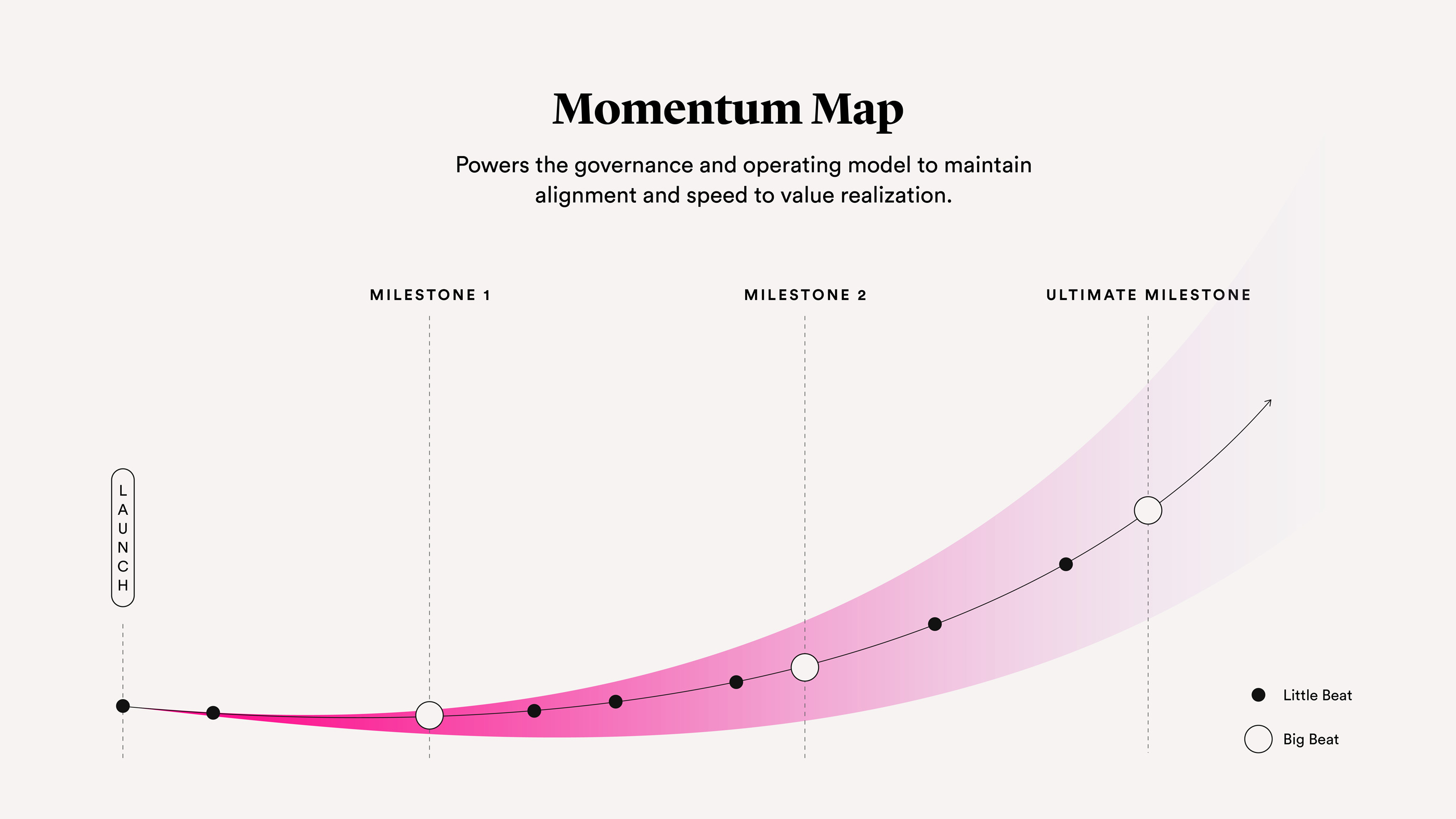
The Momentum Map is powered by brand-defining customer initiatives — key actions that deliver the boldest expression of the brand (like launching a brand-defining store, brand-defining digital experience, brand-defining product, etc.). Those initiatives are supported on another track by the enabling capabilities required to execute (e.g., supply chain, data and analytics, organizational systems, and more). And driving it all forward? A distinct lane for cultural ignition — activities that keep people connected to the vision through change, from values to behaviors to EVP.
Truth be told, building the Momentum Map is the easier lift. It’s the execution that’s hard. But when done right? That’s where the payoff lives.
Recent success at Dick’s Sporting Goods can be attributed to how tightly they’ve activated their athlete-focused strategy across four pillars: an omnichannel athlete experience, a differentiated product assortment, knowledgeable and passionate teammates, and deep engagement with the Dick’s brand. Retail and digital teams work in lockstep to create innovations like House of Sport experiential stores (complete with rock walls, batting cages, and golf simulators) and the GameChanger youth sports app (for scheduling, communication, and scorekeeping). Merchant teams curate high demand differentiated products to equip athletes at every level. Store associates receive specialized training to engage customers in a way that speaks to their sport. And marketing drives deeper interaction through partnerships that resonate across different sport audiences. This level of alignment through the business has driven record-breaking performance — culminating in Dick’s largest sales quarter in company history in early 2024 and three consecutive raises in full-year sales growth guidance through to 2025.
In times of constant change, alignment is your North Star.
On the surface, the value of True Alignment may seem obvious, and the process to get there may seem simple. And yet as countless bankruptcies, store closures, and financial flat landings show us in headlines each day, True Alignment is in fact a rare and elusive phenomenon that separates winners from losers.
But the good news is, we can all achieve True Alignment — if we’re bold enough to go after it. And it all starts by asking ourselves, as executives, a few simple questions (and answering them honestly):
Has your Vision been co-created with Executive leadership so that everyone is inspired, fully bought-in, and knows how to bring it to life within their teams?
Have you translated your vision to connected strategies across the organization that teams understand, embrace, and can execute with excellence?
No matter the answers to the above questions, asking them will give you a solid read of where you are today, but more importantly, where to focus tomorrow.
On the topic of where to focus tomorrow, stay tuned for Part 3 of Rethinking Growth — where we’ll show you how to turn True Alignment into a brand-defining experience.